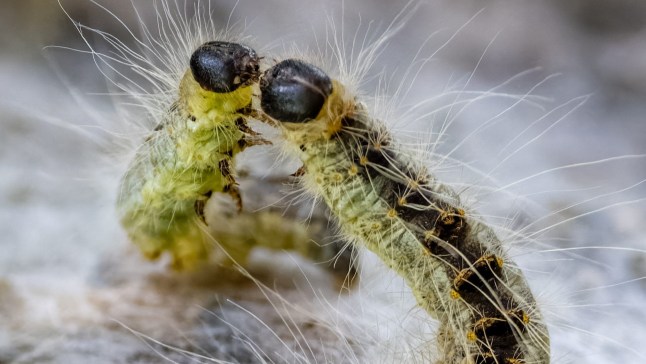
Oak processionary caterpillars are posing a real problem in Germany (Picture: Frank Hammerschmidt/DPA/Cover Media)
Playgrounds and sports facilities across Berlin are being cordoned off as authorities battle a growing infestation of oak processionary caterpillars.
The tiny pests,which can cause skin irritation and breathing problems,have spread across all 12 districts of the German capital,prompting local leaders to demand urgent action.
Each caterpillar is covered in hundreds of thousands of microscopic hairs that can be carried by the wind and trigger allergic reactions in people and animals.
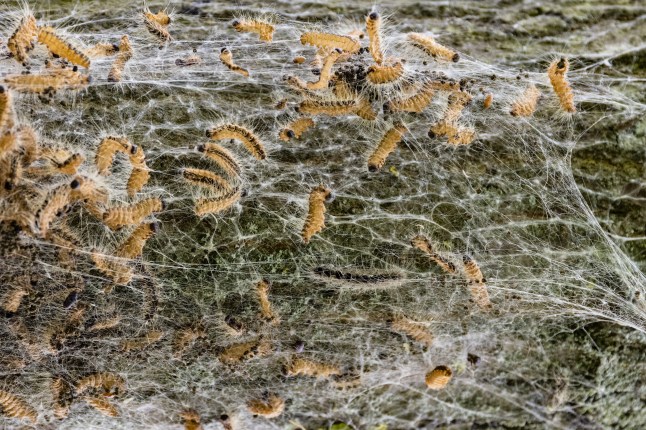
Each caterpillar is covered in hundreds of thousands of microscopic hairs that can be carried by the wind and trigger allergic reactions in people and animals (Picture: Frank Hammerschmidt/DPA/Cover Media)
The infestation has already forced the cancellation of a summer festival at the Jungfernheide family centre and led to restrictions in popular green spaces including Görlitzer Park,where barbecues have been temporarily banned.
District authorities have now written jointly to the Berlin Senate calling for the outbreak to be treated as a public health hazard rather than simply a plant protection issue.
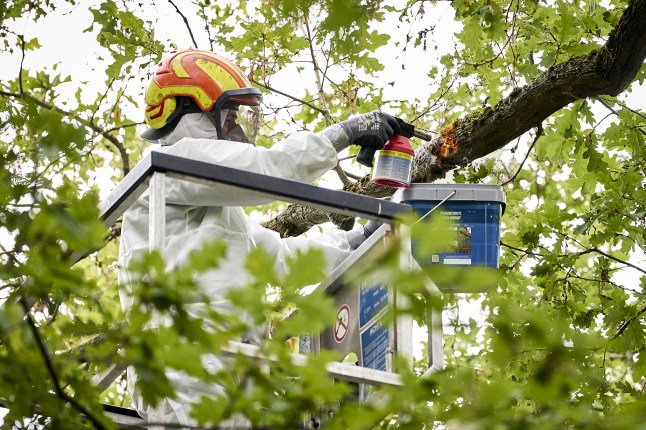 A worker using a Bunsen burner to remove an oak processionary moth nest in the Jungfernheide neighborhood (Picture: Frank Hammerschmidt/DPA/Cover Media)They are urging greater funding and city-wide coordination to tackle the problem,with schools,playgrounds,daycare centres and sports facilities identified as priorities.Control measures include vacuuming up nests and removing them using hot water and high-pressure foam systems.Last month,a warning was issued by Woking Council warning people to avoid the same breed of caterpillars.The US is dealing with its own spread of a parasitic worm called the New World screwworm.The pest can kill fully-grown cows in less than two weeks and was found in Texas.
