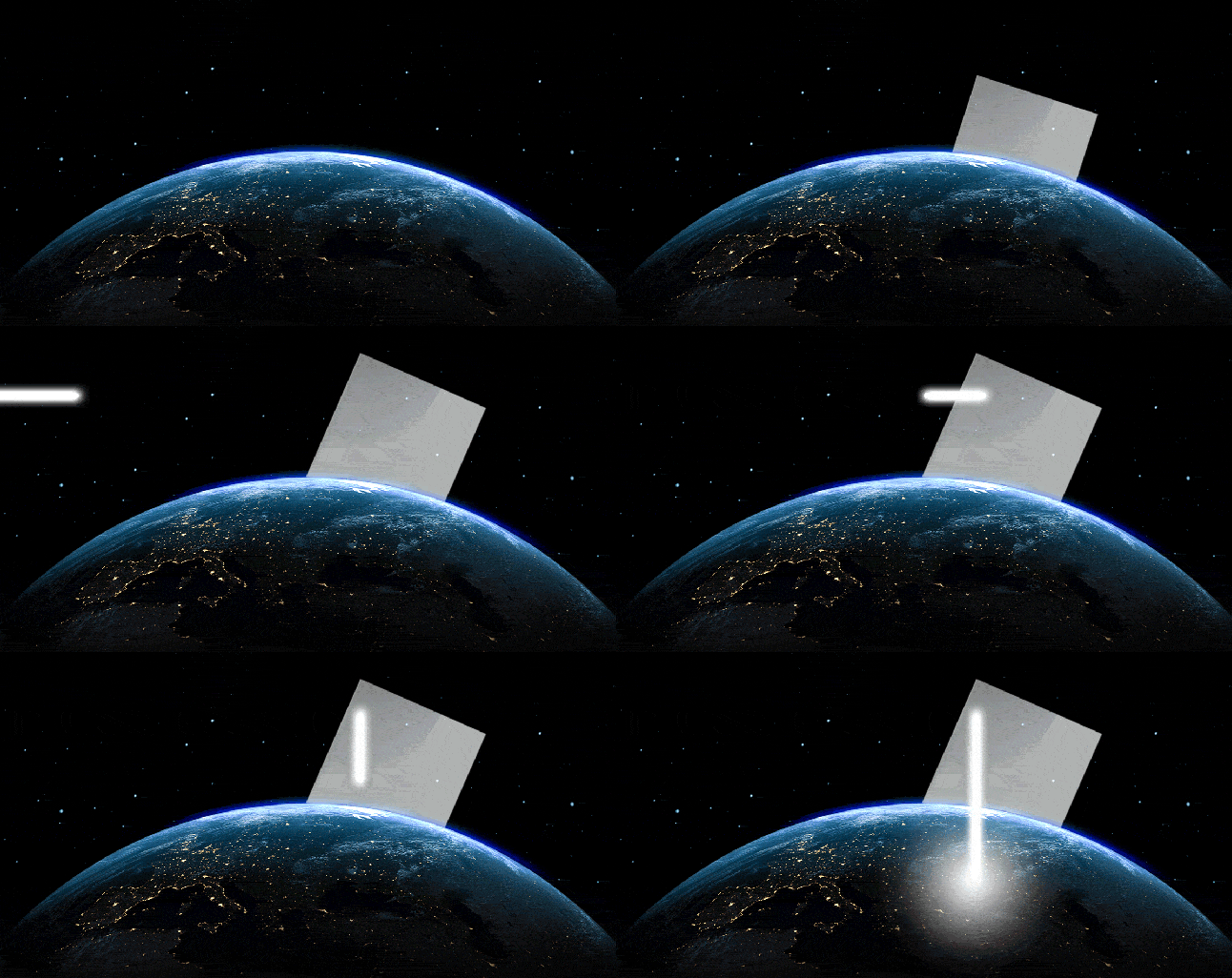
Reflect Orbital’s mirror will reflect the sun’s rays back to Earth for extra solar energy (Picture Getty/Metro)
It’s a bird. It’s a plane. No,it’s a 60-foot mirror designed to reflect sunlight back to Earth after dark.
The US government has given a start-up the green light to build a 142kg satellite that will be launched about 650km above our heads.
Eärendil-1,about the size of a fridge,will then unfurl a thin square mirror that reflects the sun’s rays to illuminate a three-mile-wide stretch of Earth.
Looking up,you would see a dot about as bright as the full moon,according to maker Reflect Orbital’s website.
The Federal Communications Commission (FCC),which regulates tech,approved a license for a ‘single demonstration satellite’ on Thursday.
Reflect Orbital wants to send its first space mirror up this year,with the aim of launching 50,000 satellites by 2035.
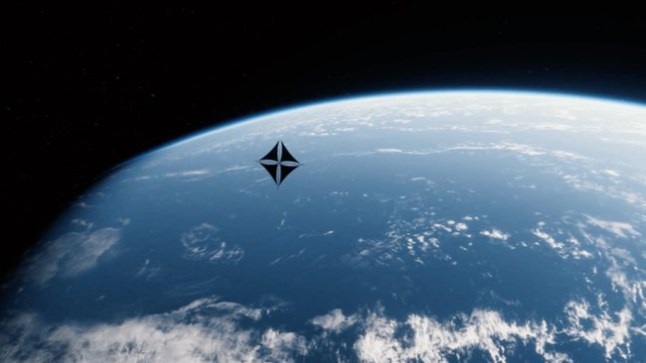
The space mirror would turn night to day down below,a bit like a cosmic spotlight (Picture: Reflect Orbital)
Doing so would light up the night sky for several hours by 36,000 lux,the unit of measurement for light – an amount comparable to daylight.
But the constellation of mirrors would illuminate the world below by 100 lux all the time,about as bright as the inside of a lift or corridor.
The idea behind the ‘solar reflector’ is that it could make ‘clean energy available on demand’ via the company’s app or website.
‘Turn it off instantly when you’re done,’ the website says,listing example uses such as lighting up an emergency scene,construction site,or farm.
All of this will come at a price – and a hefty one at that. Reflect Orbital would charge about $5,000 an hour for the light of one mirror if a customer signed up for a year-long contract.
The company’s co-founder,Ben Nowack,said in March that shining one-time events or emergencies would be more costly.
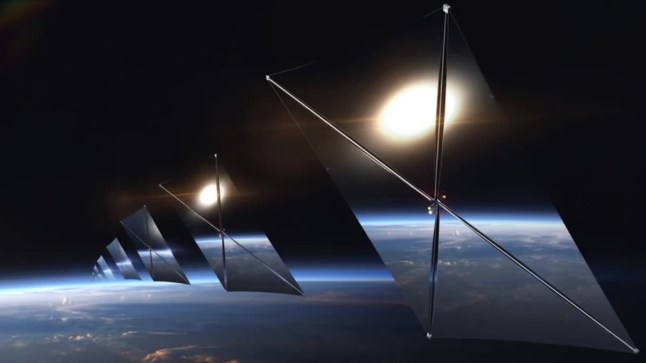
Reflect Orbital wants to make clean energy ‘on-demand’ (Picture: Reflect Orbital)
 Follow us to receive the latest news updates from Metro (Picture: Getty Images)Metro’s on Whatsapp! Join our community for breaking news and juicy stories.Meanwhile,solar farms – which can’t generate electricity in the dark – could split the profit from the power generated by the extra hours of light.Yes,this idea is more or less identical to the James Bond movie Die Another Day,where the villain builds the Icarus satellite to help grow crops.But US tech officials said the reflective film could help ‘advance American leadership in space’ and commercialise the Final Frontier.When reviewing satellite applications,the FCC considers factors such as whether the satellite’s radio communications would interfere with aircraft or if the vessel will be safely disposed of.Commission officials don’t consider environmental concerns – they’re Earthly woes,they argue,not applicable to space.They added that despite objections from astronomers and wildlife experts that the probe isn’t in the ‘public interest’,it deserves a trial run.
 Astronomers worry the project will make stargazing even harder (Picture: Andrew Fusek Peters/SWNS)‘To the contrary,it is in the public interest to make spectrum available to encourage companies to test new and innovative space activities,as it promotes American innovation and the new services and economic growth that come from that innovation,’ the order said.
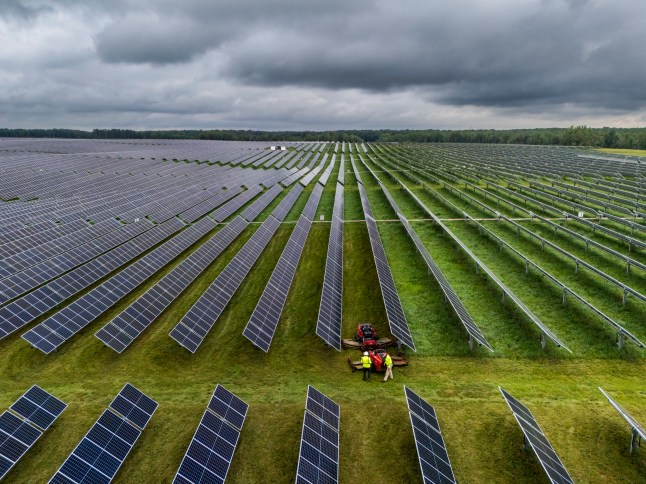 Solar farms would be lit up with reflected sunlight (Picture: EPA)Kyriacou is the president of the European Biological Rhythms Society,one of four biological clock research groups that raised concerns to the FCC.The societies even had to come up with a new name for this flying light source,‘orbital light pollution’.‘The FCC appears to have ignored our concerns,which is disappointing as this development has planetary implications,’ Kyriacou said.‘I think that’s about all I can say – bit gobsmacked,to be honest.’Then there’s a rather obvious problem,says Professor Andrew Millar,a biologist at The University of Edinburgh.‘The astronomy community is totally aghast at this prospect,’ he says. ‘They’re now discussing who’d be responsible if reflected sunlight from a Reflect Orbital satellite blinded someone looking through a telescope.’Nowack said: ‘We’re grateful to the FCC for recognising the importance of testing novel technologies in space.‘This license is the first step toward rigorously testing our technology’s efficacy and the safeguards we have developed.’Get in touch with our news team by emailing us at .For more stories like this,check our news page.
