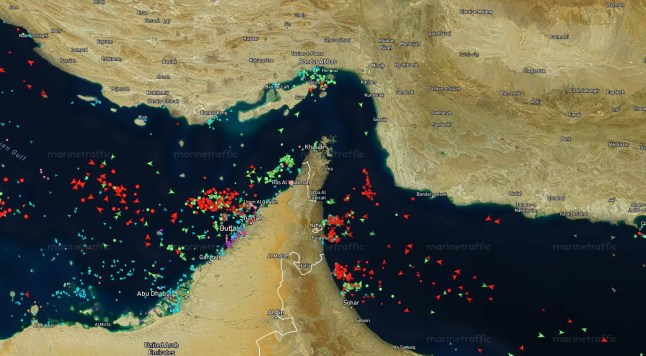
Most vessels have been stagnant since the war broke out (Picture: Marine Traffic)
‘I am not sure the Trump administration has really thought through how internationalised this waterway is and how many different flag states the US would have to deal with.’
The ceasefire agreement between Iran and the US is hanging in the balance after Donald Trump vowed to impose a blockade on the Strait of Hormuz beginning today.
The US President said he would begin the blockade soon,with Iran threatening retaliation as both sides blame each other for the failure of the ceasefire agreement.
The vital waterway is a 60-mile-wide part of the Persian Gulf,which has been at the heart of regional tensions for decades.
Although chokepoints in the shipping lane can be bypassed by using other routes,it often adds significantly to transit times.
Dr Katayoun Shahandeh of the University of London told Metro: ‘Trump’s Hormuz threat is both a coercive tactic and a real escalation risk,but it is less sweeping in practice than his rhetoric makes it sound.’
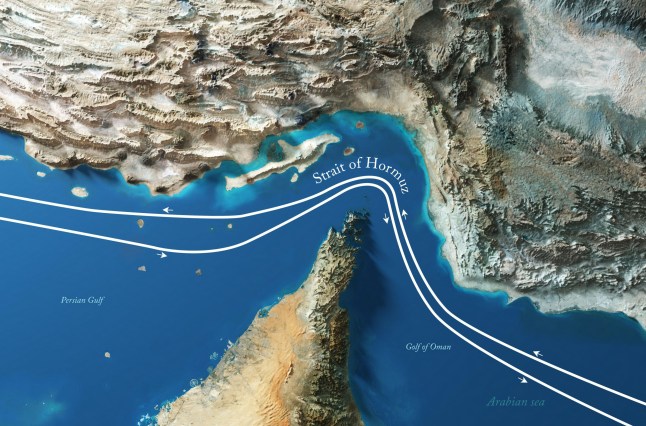 The move could place more strain on the global market (Picture: Alamy)The US isn’t just facing military obstacles – there’s a major risk of escalation from Iran’s Revolutionary Guard Corps (IRGC),which said it would treat approaching military vessels as a ceasefire breach and respond severely.‘US enforcement itself could trigger the wider war Trump says he wants to avoid,’ she added.Even a limited blockade in the Strait will spark fear,insurance shocks,ship rerouting and hesitation among the world’s largest shipping firms – with some tankers already steering clear of the Strait of Hormuz. ‘Around a fifth of global oil and LNG normally moves through Hormuz,and even before enforcement properly begins,oil has jumped sharply,and markets have wobbled,’ Dr Shahndeh said.‘Brent crude oil is already above $100 per gallon,and global financial markets continue to be under pressure after the talks collapsed and the blockade was announced.’‘Iranians,while vulnerable to such a blockade,have a much higher threshold of pain than the United States,the Gulf states or the world economy,’ Dr Krieg said.‘Iranians are likely going to sustain this pressure for much longer than the US. It would take months for Iran to feel the pain,while the world economy will face a major crisis.’
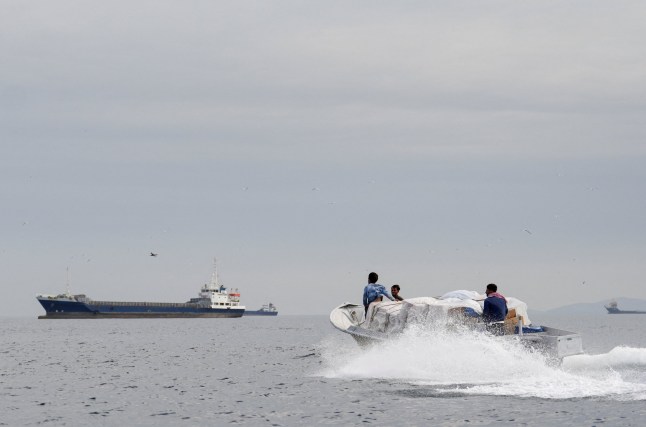 American allies in the Gulf could be unhappy with Trump’s move (Picture: Reuters)The US blockade in the Strait could further strain relationships with allies in the Gulf,who want Iran contained but also want shipping lanes to remain open.Dr Shahandeh agrees: ‘Trump may present this as a show of strength,but it also risks inflicting more pain on the global economy,on US consumers,and on his own domestic political position.’Dr Krieg told Metro that Trump appears to be responding to an Iranian blockade of the Strait with a blockade of his own.‘This means that the Strait remains closed,affecting the economies of the Gulf states,which rely on trade to run smoothly through the Strait,’ he said.‘It will aggravate anti-Trump sentiments across the Gulf as there is very little trust in his decision-making abilities. The feeling of abandonment by the US is likely to get stronger.’Get in touch with our news team by emailing us at .For more stories like this,check our news page.
